In Charlotte Bronte's Villette, Lucy Snowe travels from her home to teach at a girls' school, and in so doing, finds herself. It's a rather ambiguous tale with a puzzling ending that focuses more on Lucy's inner workings than on her outer actions. Critics have focused on this psychological aspect of the text, but one issue really stands out: The question of whether Villette can be considered a feminist or anti-feminist text is complicated by multiple issues.
For me though, determining which side of the feminist line the text falls on requires a close reading of the text in light of a careful consideration of the environment in which the text was written. Evaluating the text from a contemporary understanding of gender is disingenuous and inauthentic.
According to Helen Davis, the ideological climate of nineteenth-century Britain restricted Bronte’s ability to push a direct feminist agenda; hence, the ambiguous nature of the text in regards to a feminist reading. Portraying an independent, professional woman was “restricted by both the social norms of the receiving community and by the textual practices of the genre” (Davis 201). In order to work around these restrictions, authors such as Bronte addressed the topics “in a way that retains discursive authority while still conveying the desired meaning” (Davis 201).
This delicate balancing act between revealing and concealing results in textual ambiguities “that arise from an author’s simultaneous urge to narrate possibilities outside of the boundaries of social norms while also conforming to social and narrative expectations sufficiently to create a text that can and will be successfully disseminated” (Davis 201-202). After all, you can’t influence the minds of a culture if no one is reading your novel. So “specific events, desires, and goals that are nonconforming within the receiving community are often incorporated ambiguously” (Davis 202) leaving the text open for varied critical interpretation.
One passage from the text that addresses a specific, nonconforming concept stood out to me:
“My time was now well and profitably filled up. What with teaching others and studying closely myself, I had hardly a spare moment. It was pleasant. I felt I was getting on; not lying the stagnant prey of mould and rust, but polishing my faculties and whetting them to a keen edge with constant use. Experience of a certain kind lay before me, on no narrow scale”. (Bronte)
Many upper-class women in the Victorian Age were confined to a domestic sphere that rarely needed their active attention in any profitable way; the suggestion being they were closer to the “stagnant prey of mould and rust” Bronte mentions in this passage, their mental faculties lying dormant except for the development and maintenance of profitable social connections. Here Lucy is thrilled to be both put to use and allowed experience, but her thoughts are entirely self-directed and any implication as to criticism of social constraints is made metaphorically, not directly.
In another section of the novel, Lucy is thrilled for the simple pleasure of walking alone: “to walk alone in London seemed of itself an adventure…to do this, and to do it utterly alone, gave me, perhaps an irrational, but a real pleasure” (Bronte). Here the Victorian restriction placed on women to always be “chaperoned” (i.e. surveilled) is addressed but with the caveat that Lucy’s pleasure is “perhaps irrational”.
Despite the ambiguities and caveats in the text as a whole, certain passages do reflect a directly feminist argument. For example, when speaking of Madame Beck, Lucy feels “that school offered her for her powers too limited a sphere; she ought to have swayed a nation: she should have been the leader of a turbulent legislative assembly” (Bronte). Madame Beck is restricted from participating in government by her gender, but Lucy directly states that’s where her talents would best serve.
Bronte does, ultimately, present a feminist perspective for her time. At the end of Villette, Lucy is “a single, successful businessperson, an identity that threatens her standing as a socially acceptable narrator and woman” (Davis 202). Her outcome provides a “different kind of success, one connected to ambition and independence” that is “not socially acceptable in the nineteenth century” (Davis 203). Bronte has set up a female role model, of sorts, for those women who searched for happiness outside of marriage. Unfortunately, Bronte has to temper Lucy’s independence and “in the interest of self-preservation, [Lucy] presents her success as the result of circumstance and others’ actions rather than the endpoint of her own active striving” (Davis 202). Lucy can’t “openly acknowledge her goals without alienating contemporary readers” (Davis 203).
I'm wondering if any of you see this in contemporary literature. What issues or perspectives do we water down in order to make it palatable to readers?
Works Cited
Bronte, Charlotte. Villette. Project Gutenberg. Web. 26 March 2016.
Davis, Helen. “I Seemed to Hold Two Lives”: Disclosing Circumnarration in Villette and The Picture of Dorien Gray”. Narrative 21.2 (May 2013): 198-220. Web. 29 March 2016.
Showing posts with label book discussion. Show all posts
19 May 2016
03 May 2016
Sartor Resartus and Permission to Doubt
David Amigoni, in Victorian Literature, remarks that Victorian society revolved around oppositions: rural and urban, modernity and historicity, progress and tradition, and science and faith (5-6). Continually stuck in a fight between opposing and contradictory ideologies, the Victorians were probably relieved by the permission to doubt granted them in Thomas Carlyle’s Sartor Resartus.
Sartor Resartus, often referred to as Thomas Carlyle’s “spiritual autobiography”, follows the main character, Diogenes, as he “gains an education steeped in the traditions of the Enlightenment which destroys his belief in revealed religion, but leaves him little or nothing positive to embrace” (Trela). All of this leads to a crisis of faith which we see in “The Everlasting No”. Diogenes goes through a period of doubt in “The Center of Indifference” but then he realizes that he must embrace the divinity of the universe as expressed in “The Everlasting Yea”. Diogenes's path, and much of his reasoning, mirrors that of Carlyle himself as he worked through his own crisis of faith (Trela). By putting his own spiritual journey out there, himself a great man known for his intellectualism and his faith, Carlyle gave Victorians permission to question the traditional views and dogma of established religions.
The argument Carlyle makes that might have helped allay Victorian anxiety is that doubt increases faith. Carlyle writes that readers can’t “call our Diogenes” wicked due to his crisis of faith because “unprofitable servants as we all are, perhaps at no era of his life was he more decisively the Servant of Goodness, the Servant of God, than even now when doubting God’s existence”. Carlyle contends that true faith requires challenge and that “a tearing down or questioning of the beliefs of one faith is in fact the preparation for a newer, richer, and truer form of belief in a new era” (Trela).
He gives Victorians permission to question their faith and to modify it for a new generation: “In every new era, too, such Solution comes out in different terms; and ever the Solution of the last era has become obsolete, and is found unserviceable. For it is man’s nature to change his Dialect from century to century; he cannot help it though he would” (Carlyle). Victorians embodied change and that spilled over into faith; as Amigoni states, “religious faith in a stable creation was never far from intellectual skepticism engendered by a sense of impermanence in Victorian society and culture” (Amigoni 6). For a society in the midst of tremendous change in all aspects of life, a society steeped in tradition, simultaneously hanging on to and rejecting ideologies of the past, permission to change must have been comforting.
Then again, even with the relieving messages in the text, Victorian society may not have benefitted from Sartor Resartus at all as it received a “bewildered reception with the audience of its day; neither Tories, Utilitarians, nor Whigs really understood it…due to Carlyle’s intentional disruption of the expectations of his British audience’s naïve realism” (Baker 225). Even if the text was understood by a broad audience, the Victorians never had a massive revival of faith, at least not to the “Everlasting Yea” extreme.
As with Victorian times, contemporary western societies may feel relief or even vindication at Carlyle’s contention that doubt is a path to a stronger faith. Doubt in a higher power permeates western culture as, again like with the Victorians, science continually answers those questions once put to God, and experience and humanity deny tenets of organized religious dogma once held fast. Also like the Victorians, contemporaries seem stuck at Doubt, never quite making it to the Everlasting Yea.
Works Cited
Amigoni, David. Victorian Literature. Edinburgh: Edinburgh University Press, 2011. Print.
Baker, Lee C. R. “The Open Secret of “Sartor Resartus”: Carlyle’s Method of Converting His Reader”. Studies in Philology 83.2 (Spring 1986): 218-235. Web. 8 Mar. 2016.
Carlyle, Thomas. Sartor Resartus. eBooks@Adelaide. The University of Adelaide. Web. 6 March 2016.
Trela, D.J. "Carlyle, Thomas 1795-1881." Encyclopedia of Life Writing: Autobiographical and Biographical Forms. Ed. Margaretta Jolly. London: Routledge, 2001. Credo Reference. Web. 8 Mar. 2016.
Sartor Resartus, often referred to as Thomas Carlyle’s “spiritual autobiography”, follows the main character, Diogenes, as he “gains an education steeped in the traditions of the Enlightenment which destroys his belief in revealed religion, but leaves him little or nothing positive to embrace” (Trela). All of this leads to a crisis of faith which we see in “The Everlasting No”. Diogenes goes through a period of doubt in “The Center of Indifference” but then he realizes that he must embrace the divinity of the universe as expressed in “The Everlasting Yea”. Diogenes's path, and much of his reasoning, mirrors that of Carlyle himself as he worked through his own crisis of faith (Trela). By putting his own spiritual journey out there, himself a great man known for his intellectualism and his faith, Carlyle gave Victorians permission to question the traditional views and dogma of established religions.
The argument Carlyle makes that might have helped allay Victorian anxiety is that doubt increases faith. Carlyle writes that readers can’t “call our Diogenes” wicked due to his crisis of faith because “unprofitable servants as we all are, perhaps at no era of his life was he more decisively the Servant of Goodness, the Servant of God, than even now when doubting God’s existence”. Carlyle contends that true faith requires challenge and that “a tearing down or questioning of the beliefs of one faith is in fact the preparation for a newer, richer, and truer form of belief in a new era” (Trela).
He gives Victorians permission to question their faith and to modify it for a new generation: “In every new era, too, such Solution comes out in different terms; and ever the Solution of the last era has become obsolete, and is found unserviceable. For it is man’s nature to change his Dialect from century to century; he cannot help it though he would” (Carlyle). Victorians embodied change and that spilled over into faith; as Amigoni states, “religious faith in a stable creation was never far from intellectual skepticism engendered by a sense of impermanence in Victorian society and culture” (Amigoni 6). For a society in the midst of tremendous change in all aspects of life, a society steeped in tradition, simultaneously hanging on to and rejecting ideologies of the past, permission to change must have been comforting.
Then again, even with the relieving messages in the text, Victorian society may not have benefitted from Sartor Resartus at all as it received a “bewildered reception with the audience of its day; neither Tories, Utilitarians, nor Whigs really understood it…due to Carlyle’s intentional disruption of the expectations of his British audience’s naïve realism” (Baker 225). Even if the text was understood by a broad audience, the Victorians never had a massive revival of faith, at least not to the “Everlasting Yea” extreme.
As with Victorian times, contemporary western societies may feel relief or even vindication at Carlyle’s contention that doubt is a path to a stronger faith. Doubt in a higher power permeates western culture as, again like with the Victorians, science continually answers those questions once put to God, and experience and humanity deny tenets of organized religious dogma once held fast. Also like the Victorians, contemporaries seem stuck at Doubt, never quite making it to the Everlasting Yea.
Works Cited
Amigoni, David. Victorian Literature. Edinburgh: Edinburgh University Press, 2011. Print.
Baker, Lee C. R. “The Open Secret of “Sartor Resartus”: Carlyle’s Method of Converting His Reader”. Studies in Philology 83.2 (Spring 1986): 218-235. Web. 8 Mar. 2016.
Carlyle, Thomas. Sartor Resartus. eBooks@Adelaide. The University of Adelaide. Web. 6 March 2016.
Trela, D.J. "Carlyle, Thomas 1795-1881." Encyclopedia of Life Writing: Autobiographical and Biographical Forms. Ed. Margaretta Jolly. London: Routledge, 2001. Credo Reference. Web. 8 Mar. 2016.
26 April 2016
Traditional Wins in Early American Lit
I recently posted a review of Henry James's Daisy Miller in which I remarked that the overall plot of the novella suggests that the traditional views of acceptable behavior and thought win out over the progressiveness of American culture. The novella challenges the status quo through the character of Daisy, who we are clearly supposed to identify with, and yet her comeuppance is quite drastic, suggesting a less-than-stellar recommendation for defying tradition.
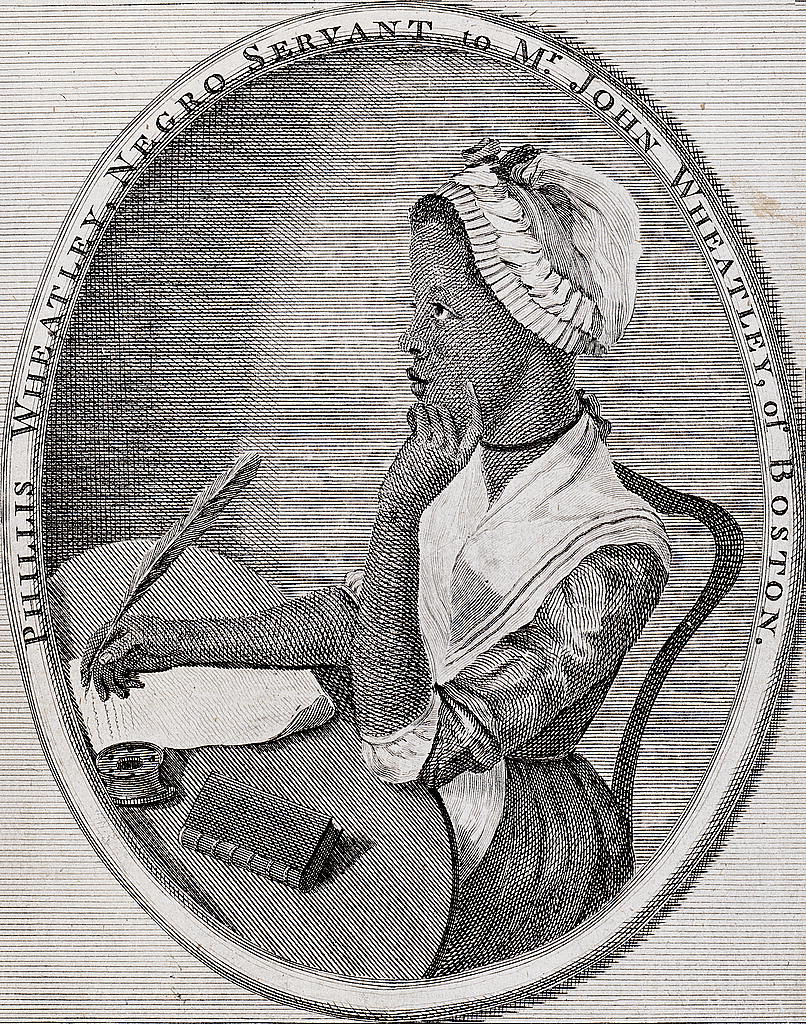
Possibly the most remarkable example of the traditional or dominant culture winning in early American Lit is the story of Phillis Wheatley, a slave living in the mid-1800s. While the white family she - quite literally - belonged to is alive, Wheatley enjoys a privileged position in society, even traveling to Europe and socializing with aristocracy and dignitaries. When that family passes, however, Wheatley loses her status and eventually dies in abject poverty. Despite being renowned in the Western world as a great poet, the American public refused to support Wheatley.
It is arguable that the dominant culture, white American culture, won out long before Wheatley's fall to poverty and eventual death. Wheatley's acclimation to white America was astounding, she even went so far as to write the following in one of her poems:
"'Twas mercy brought me from my Pagan land,
Taught my benighted soul to understand
That there's a God".
She believes that her arrival in Western culture which brought her to Christianity is a blessing despite the fact she was kidnapped and sold into slavery. For a modern reader, this is, I think, rather distasteful; although she does lighten the horror by using this opening as a way to introduce the idea that while "some view our sable race with scornful eye" Americans need to know that "Negros, black as Cain, / May be refin'd, and join th' angelic train". Still, by saying that African-Americans need to be "refin'd" she is letting white American culture win.
Strangely Wheatley's life story and James's fictional one seem to contradict each other regarding the progressiveness of American and European society. In Daisy Miller, it is the Americans who are progressive; whereas the opposite is true in Wheatley's case. Europe would not countenance a female who disregarded the boundaries of her gender; America would not support an African-American who disregarded the boundaries of her race. This makes me want to read more works about the collision of European and American society in regards to gender and racial equality. Was Europe open to racial equality but bound and determined to deny women? Was America okay with progressive women but adamant against equality across race? If you have any suggestions on relevant books, I would love to hear them!
James and Wheatley both feature two cultures colliding, and it is clear that all parties are effected by the clash, but in all both cases, the dominant culture wins. Overall, do you think these authors are challenging the status quo or supporting it?
Possibly the most remarkable example of the traditional or dominant culture winning in early American Lit is the story of Phillis Wheatley, a slave living in the mid-1800s. While the white family she - quite literally - belonged to is alive, Wheatley enjoys a privileged position in society, even traveling to Europe and socializing with aristocracy and dignitaries. When that family passes, however, Wheatley loses her status and eventually dies in abject poverty. Despite being renowned in the Western world as a great poet, the American public refused to support Wheatley.
It is arguable that the dominant culture, white American culture, won out long before Wheatley's fall to poverty and eventual death. Wheatley's acclimation to white America was astounding, she even went so far as to write the following in one of her poems:
"'Twas mercy brought me from my Pagan land,
Taught my benighted soul to understand
That there's a God".
She believes that her arrival in Western culture which brought her to Christianity is a blessing despite the fact she was kidnapped and sold into slavery. For a modern reader, this is, I think, rather distasteful; although she does lighten the horror by using this opening as a way to introduce the idea that while "some view our sable race with scornful eye" Americans need to know that "Negros, black as Cain, / May be refin'd, and join th' angelic train". Still, by saying that African-Americans need to be "refin'd" she is letting white American culture win.
Strangely Wheatley's life story and James's fictional one seem to contradict each other regarding the progressiveness of American and European society. In Daisy Miller, it is the Americans who are progressive; whereas the opposite is true in Wheatley's case. Europe would not countenance a female who disregarded the boundaries of her gender; America would not support an African-American who disregarded the boundaries of her race. This makes me want to read more works about the collision of European and American society in regards to gender and racial equality. Was Europe open to racial equality but bound and determined to deny women? Was America okay with progressive women but adamant against equality across race? If you have any suggestions on relevant books, I would love to hear them!
James and Wheatley both feature two cultures colliding, and it is clear that all parties are effected by the clash, but in all both cases, the dominant culture wins. Overall, do you think these authors are challenging the status quo or supporting it?
19 April 2016
Americans and the Other
Nothing binds Americans together more than the foreign “Other”, especially in the context of war.
On the morning of September 11, 2001, I was tiredly sitting on the “L”, on my way to work in downtown Chicago. I didn’t make it two steps into my building when we were sent home for fear an attack on Chicago was imminent. Over the next year, I was impressed, frustrated, and disgusted by the American reaction to the tragedy. Patriotism skyrocketed, flags were flying everywhere, and Americans were joining together in solidarity. Well, Americans that didn’t look like the people who attacked the country anyway. Those Americans were being ostracized and demonized.
David Foster Wallace, in his article “9/11: The View from the Midwest”, really captures the feel of those days. When explaining the unity of Americans at the time, Wallace points out the strange truth about flags: “If the purpose of a flag is to make a statement, it seems like at a certain point of density of flags you’re making more of a statement if you don’t have one out” (Wallace). The sense that not joining in the unified display of patriotism was an indication of hating America or sympathizing with terrorists was very real. When threatened by an outside force, America joins together in an almost obsessive way, and there is certainly a negative reaction against those who do not join in the spectacle of unity.
Whitman, in “Over the Carnage Rose Prophetic a Voice” and “First O Songs for a Prelude”, discusses American unity in a much more positive light. Wallace’s undertones suggest a possible falsity to the displays of unity; he points out that his fear over not having a plastic flag is rather macabre when so many just died - the unity of the living subjugating the loss of the dead. Whitman’s discussion, however, proposes this unity is a favorable attribute.
In “Over the Carnage Rose Prophetic a Voice,” Whitman argues that the only way for peace and freedom to flourish is through love. I think his poem would have been useful in the days after 9/11. Arguing that “the continuance of Equality shall be comrades”, Whitman’s words may have discouraged the rampant hatred that sprung up against the Middle East, against Muslims, against anyone who looked in any way like the terrorists.
Whitman again addresses this unity in his poem “First O Songs for a Prelude” which is about the way his community quickly “threw off the costumes of peace with indifferent hand” to join in the war. He speaks of all the men, listing various jobs they have, leaving to fight, arming themselves, “blood up”. The men join together in arms, the mothers sadly, worriedly support their sons' decision to join, all are working together towards the united front.
In “Over the Carnage Rose Prophetic a Voice”, Whitman says “affection shall solve the problems of freedom yet”, and I certainly hope this is true. This theme of Americans joining together in solidarity – whether to fight or to support the fighters - seems common in American war literature.
Obviously patriotism is still alive and well in America today, but do you think the extremes of it are actually polarizing the country?
On the morning of September 11, 2001, I was tiredly sitting on the “L”, on my way to work in downtown Chicago. I didn’t make it two steps into my building when we were sent home for fear an attack on Chicago was imminent. Over the next year, I was impressed, frustrated, and disgusted by the American reaction to the tragedy. Patriotism skyrocketed, flags were flying everywhere, and Americans were joining together in solidarity. Well, Americans that didn’t look like the people who attacked the country anyway. Those Americans were being ostracized and demonized.
David Foster Wallace, in his article “9/11: The View from the Midwest”, really captures the feel of those days. When explaining the unity of Americans at the time, Wallace points out the strange truth about flags: “If the purpose of a flag is to make a statement, it seems like at a certain point of density of flags you’re making more of a statement if you don’t have one out” (Wallace). The sense that not joining in the unified display of patriotism was an indication of hating America or sympathizing with terrorists was very real. When threatened by an outside force, America joins together in an almost obsessive way, and there is certainly a negative reaction against those who do not join in the spectacle of unity.
Whitman, in “Over the Carnage Rose Prophetic a Voice” and “First O Songs for a Prelude”, discusses American unity in a much more positive light. Wallace’s undertones suggest a possible falsity to the displays of unity; he points out that his fear over not having a plastic flag is rather macabre when so many just died - the unity of the living subjugating the loss of the dead. Whitman’s discussion, however, proposes this unity is a favorable attribute.
In “Over the Carnage Rose Prophetic a Voice,” Whitman argues that the only way for peace and freedom to flourish is through love. I think his poem would have been useful in the days after 9/11. Arguing that “the continuance of Equality shall be comrades”, Whitman’s words may have discouraged the rampant hatred that sprung up against the Middle East, against Muslims, against anyone who looked in any way like the terrorists.
Whitman again addresses this unity in his poem “First O Songs for a Prelude” which is about the way his community quickly “threw off the costumes of peace with indifferent hand” to join in the war. He speaks of all the men, listing various jobs they have, leaving to fight, arming themselves, “blood up”. The men join together in arms, the mothers sadly, worriedly support their sons' decision to join, all are working together towards the united front.
In “Over the Carnage Rose Prophetic a Voice”, Whitman says “affection shall solve the problems of freedom yet”, and I certainly hope this is true. This theme of Americans joining together in solidarity – whether to fight or to support the fighters - seems common in American war literature.
Obviously patriotism is still alive and well in America today, but do you think the extremes of it are actually polarizing the country?
12 April 2016
Sartor Resartus: Faith and Doubt in Victorian Britain
David Amigoni, in Victorian Literature, remarks that Victorian society revolved around oppositions: rural and urban, modernity and historicity, progress and tradition, and science and faith (5-6). Continually stuck in a fight between opposing and contradictory ideologies, the Victorians were probably relieved by the permission to doubt granted them in chapters 7, 8, and 9 of Book Two in Thomas Carlyle’s Sartor Resartus.
Sartor Resartus, often referred to as Thomas Carlyle’s “spiritual autobiography”, follows the main character, Diogenes, as he “gains an education steeped in the traditions of the Enlightenment which destroys his belief in revealed religion, but leaves him little or nothing positive to embrace” (Trela). All of this leads to a crisis of faith which we see in “The Everlasting No”. Diogenes goes through a period of doubt in “The Center of Indifference” but then he realizes that he must embrace the divinity of the universe as expressed in “The Everlasting Yea”. Diogenes's path, and much of his reasoning, mirrors that of Carlyle himself as he worked through his own crisis of faith (Trela). By putting his own spiritual journey out there, himself a great man known for his intellectualism and his faith, Carlyle gave Victorians permission to question the traditional views and dogma of established religions.
The argument Carlyle makes that might have helped allay Victorian anxiety is that doubt increases faith. Carlyle writes that readers can’t “call our Diogenes” wicked due to his crisis of faith because “unprofitable servants as we all are, perhaps at no era of his life was he more decisively the Servant of Goodness, the Servant of God, than even now when doubting God’s existence”. Carlyle contends that true faith requires challenge and that “a tearing down or questioning of the beliefs of one faith is in fact the preparation for a newer, richer, and truer form of belief in a new era” (Trela). He gives Victorians permission to question their faith and to modify it for a new generation: “In every new era, too, such Solution comes out in different terms; and ever the Solution of the last era has become obsolete, and is found unserviceable. For it is man’s nature to change his Dialect from century to century; he cannot help it though he would” (Carlyle). Victorians embodied change and that spilled over into faith; as Amigoni states, “religious faith in a stable creation was never far from intellectual skepticism engendered by a sense of impermanence in Victorian society and culture” (Amigoni 6). For a society in the midst of tremendous change in all aspects of life, a society steeped in tradition, simultaneously hanging on to and rejecting ideologies of the past, permission to change must have been comforting.
Then again, even with the relieving messages in the text, Victorian society may not have benefitted from Sartor Resartus at all as it received a “bewildered reception with the audience of its day; neither Tories, Utilitarians, nor Whigs really understood it…due to Carlyle’s intentional disruption of the expectations of his British audience’s naïve realism” (Baker 225). Even if the text was understood by a broad audience, the Victorians never had a massive revival of faith, at least not to the “Everlasting Yea” extreme.
As with Victorian times, contemporary western societies may feel relief or even vindication at Carlyle’s contention that doubt is a path to a stronger faith. Doubt in a higher power permeates western culture as, again like with the Victorians, science continually answers those questions once put to God and experience and humanity deny tenets of organized religious dogma once held fast. Also like the Victorians, contemporaries seem stuck at Doubt, never quite making it to the Everlasting Yea.
Do you think people appreciate permission to doubt? Does doubt actually increase faith?
Works Cited
Amigoni, David. Victorian Literature. Edinburgh: Edinburgh University Press, 2011. Print.
Baker, Lee C. R. “The Open Secret of “Sartor Resartus”: Carlyle’s Method of Converting His Reader”. Studies in Philology 83.2 (Spring 1986): 218-235. Web. 8 Mar. 2016.
Carlyle, Thomas. Sartor Resartus. eBooks@Adelaide. The University of Adelaide. Web. 6 March 2016.
Trela, D.J. "Carlyle, Thomas 1795-1881." Encyclopedia of Life Writing: Autobiographical and Biographical Forms. Ed. Margaretta Jolly. London: Routledge, 2001. Credo Reference. Web. 8 Mar. 2016.
The argument Carlyle makes that might have helped allay Victorian anxiety is that doubt increases faith. Carlyle writes that readers can’t “call our Diogenes” wicked due to his crisis of faith because “unprofitable servants as we all are, perhaps at no era of his life was he more decisively the Servant of Goodness, the Servant of God, than even now when doubting God’s existence”. Carlyle contends that true faith requires challenge and that “a tearing down or questioning of the beliefs of one faith is in fact the preparation for a newer, richer, and truer form of belief in a new era” (Trela). He gives Victorians permission to question their faith and to modify it for a new generation: “In every new era, too, such Solution comes out in different terms; and ever the Solution of the last era has become obsolete, and is found unserviceable. For it is man’s nature to change his Dialect from century to century; he cannot help it though he would” (Carlyle). Victorians embodied change and that spilled over into faith; as Amigoni states, “religious faith in a stable creation was never far from intellectual skepticism engendered by a sense of impermanence in Victorian society and culture” (Amigoni 6). For a society in the midst of tremendous change in all aspects of life, a society steeped in tradition, simultaneously hanging on to and rejecting ideologies of the past, permission to change must have been comforting.
Then again, even with the relieving messages in the text, Victorian society may not have benefitted from Sartor Resartus at all as it received a “bewildered reception with the audience of its day; neither Tories, Utilitarians, nor Whigs really understood it…due to Carlyle’s intentional disruption of the expectations of his British audience’s naïve realism” (Baker 225). Even if the text was understood by a broad audience, the Victorians never had a massive revival of faith, at least not to the “Everlasting Yea” extreme.
As with Victorian times, contemporary western societies may feel relief or even vindication at Carlyle’s contention that doubt is a path to a stronger faith. Doubt in a higher power permeates western culture as, again like with the Victorians, science continually answers those questions once put to God and experience and humanity deny tenets of organized religious dogma once held fast. Also like the Victorians, contemporaries seem stuck at Doubt, never quite making it to the Everlasting Yea.
Do you think people appreciate permission to doubt? Does doubt actually increase faith?
Works Cited
Amigoni, David. Victorian Literature. Edinburgh: Edinburgh University Press, 2011. Print.
Baker, Lee C. R. “The Open Secret of “Sartor Resartus”: Carlyle’s Method of Converting His Reader”. Studies in Philology 83.2 (Spring 1986): 218-235. Web. 8 Mar. 2016.
Carlyle, Thomas. Sartor Resartus. eBooks@Adelaide. The University of Adelaide. Web. 6 March 2016.
Trela, D.J. "Carlyle, Thomas 1795-1881." Encyclopedia of Life Writing: Autobiographical and Biographical Forms. Ed. Margaretta Jolly. London: Routledge, 2001. Credo Reference. Web. 8 Mar. 2016.
05 April 2016
The Sun Also Rises and The Yellow Wallpaper
The female narrator of "The Yellow Wallpaper" and the lead female character in The Sun Also Rises are two extremely different personalities, highlighting extreme responses to gender-based expectations of behavior in American culture. One submits completely to male power; the other defies it just as completely.
The unnamed narrator in "The Yellow Wallpaper", despite her own contradictory opinions, acquiesces to the expectations of the men in her life who function as authorities, as parents almost. She knows that her husband's prescribed treatment for her "nervous condition" is not helping; she even knows that she is, in fact, getting worse. Despite her knowledge, she cannot break free of the constraints put upon her by a society which removes personal power from the hands of women and places it directly into the hands of the men in her life. The narrator is at the mercy of her husband and brother.
In The Sun Also Rises, Brett, conversely, defies the expectations of her gender, adopts masculine traits, clothing, and hair styles, and continuously acts according to her own preferences. She is in charge of her own life in a way the narrator in "The Yellow Wallpaper" is not and cannot be. Most of the criticism that focuses on Brett as a “bitch” looks primarily at "the ways in which she dominates the various male characters" (Yu). This domination is quite opposite from the complete and utter submission of "The Yellow Wallpaper's" narrator. She is not pliable or content but she is compliant; Brett, however, "unlike most women of the nineteenth century...is always in control of her surroundings" (Marney). I'm not quite sure how much happiness Brett's agency gave her though; although certainly more than the unnamed narrator who just goes batshit insane.
Only 34 years separate these two stories. Do you think gender expectations changed that drastically from 1892 to 1926 or are these each extremes of their time?
The unnamed narrator in "The Yellow Wallpaper", despite her own contradictory opinions, acquiesces to the expectations of the men in her life who function as authorities, as parents almost. She knows that her husband's prescribed treatment for her "nervous condition" is not helping; she even knows that she is, in fact, getting worse. Despite her knowledge, she cannot break free of the constraints put upon her by a society which removes personal power from the hands of women and places it directly into the hands of the men in her life. The narrator is at the mercy of her husband and brother.
In The Sun Also Rises, Brett, conversely, defies the expectations of her gender, adopts masculine traits, clothing, and hair styles, and continuously acts according to her own preferences. She is in charge of her own life in a way the narrator in "The Yellow Wallpaper" is not and cannot be. Most of the criticism that focuses on Brett as a “bitch” looks primarily at "the ways in which she dominates the various male characters" (Yu). This domination is quite opposite from the complete and utter submission of "The Yellow Wallpaper's" narrator. She is not pliable or content but she is compliant; Brett, however, "unlike most women of the nineteenth century...is always in control of her surroundings" (Marney). I'm not quite sure how much happiness Brett's agency gave her though; although certainly more than the unnamed narrator who just goes batshit insane.
Only 34 years separate these two stories. Do you think gender expectations changed that drastically from 1892 to 1926 or are these each extremes of their time?
29 March 2016
The Bluest Eye and Bartleby
Topics in American Lit had me positioning disparate stories in relation to each other from very particular perspectives. In this case, I had to look at Toni Morrison's The Bluest Eye and Herman Mellville's "Bartleby the Scrivener" focusing on their respective representations of work.
The different aspects of work - type, setting, enjoyability, purpose, and so on - are quite different in these two stories. Written by authors of different times, races, and genders about people of different times, races, genders, and social classes, the two texts do not seem to be comparable on any definitive level.
Both are quite particular stories directed at a narrow purpose for a defined audience. The Bluest Eye is the story of Pecola Breedlove, a young, poor, black girl, and the community around her. Through the characters in this story, Morrison explores issues of race, beauty, family, and survival. "Bartleby the Scrivener" on the other hand focuses on issues of control and agency in a capitalist society. Morrison's novel focuses on a poor black community and Melville's on a group of upper middle class white men.
I think, however, the juxtaposition of these stories reveals an interesting thought-experiment about gender and the workplace. Based on the type of work discussed and the hardships therein, a reader could surmise that Melville's work is set in a time well after Morrison's. Melville's office setting and its accompanying objective and passive feel seem more modern than the work described in The Bluest Eye. While race certainly plays a part in this difference, the contradiction, I think, arises because the workers in "Bartleby" are men and in The Bluest Eye, they are women.
Morrison's novel is set in 1941, a time women were just starting to make a significant shift into the workforce to replace the men lost to fighting World War II. The advent of Rosie the Riveter as a cultural icon and recruitment tool would not occur until 1942 with the iconic image not appearing until 1943. Prior to this point, and well represented in The Bluest Eye, most women's work directly related to the "duties" of a wife. Whether caring for children, cooking food, cleaning houses, or having sex with men, the paid-for jobs delegated to women were generally domestic in nature. Pauline cooks, cleans, and cares for a white family; China, Poland, and Miss Marie are all prostitutes; even Miss Bertha, who runs a "small candy, snuff, and tobacco store", does so in an informal, domestic way from "one brick room sitting in her front yard". It's more like going over to a friend's house than going to a business.
"Bartleby the Scrivener", set almost 100 years prior to The Bluest Eye, highlights the importance gender can have on work. The workplace setting detailed in this short story is markedly different from the work in Morrison's novel. The all-male workplace setting is professional, productive, cold. In stark contrast, the workplace settings described in The Bluest Eye are more relaxed and home-like. When Claudia and Frieda go to Miss Bertha's store, she is "sitting behind the counter reading a Bible in a tube of sunlight". Pauline is so "at-home" in her work that the white child she cares for calls her Polly even when her own children call her Mrs. Breedlove. In "Bartleby", however, the men work in a much different setting: "At one end they looked upon the white wall of the interior of a spacious sky-light shaft, penetrating the building from top to bottom. This view might have been considered rather tame than otherwise, deficient in what landscape painters call “life.” The "life" referred to here is an embedded part of the women's work in The Bluest Eye.
I think the lifelessness of the office is mirrored in the lifelessness of Bartleby who is described as "a motionless young man", "pallidly neat, pitiably respectable, incurably forlorn", and possessing a "cadaverously gentlemanly nonchalance". Bartleby is the embodiment of the apathetic dullness of a capitalist workplace; he and the work represented are a paleness that is in direct contrast to the admittedly dark and horrible but quite vibrant work of the women of Morrison's novel.
Despite the obvious differences, I think both workplaces are represented as monotonous, lacking in opportunity, a hardship, and a more encompassing part of life than is truly desirable. Work is certainly not portrayed as a happy, life-affirming activity in either text.
Quick Review: The Bluest Eye and "Bartleby the Scrivener" are both well worth reading. If you've read other works by Morrison, you know that she has a remarkable way with words and she is not afraid to tackle the intricacies of complex life issues. Melville's short story shares those characteristics. It is an expertly woven tale that uses simplicity to highlight some very complicated issues.
The different aspects of work - type, setting, enjoyability, purpose, and so on - are quite different in these two stories. Written by authors of different times, races, and genders about people of different times, races, genders, and social classes, the two texts do not seem to be comparable on any definitive level.
Both are quite particular stories directed at a narrow purpose for a defined audience. The Bluest Eye is the story of Pecola Breedlove, a young, poor, black girl, and the community around her. Through the characters in this story, Morrison explores issues of race, beauty, family, and survival. "Bartleby the Scrivener" on the other hand focuses on issues of control and agency in a capitalist society. Morrison's novel focuses on a poor black community and Melville's on a group of upper middle class white men.
I think, however, the juxtaposition of these stories reveals an interesting thought-experiment about gender and the workplace. Based on the type of work discussed and the hardships therein, a reader could surmise that Melville's work is set in a time well after Morrison's. Melville's office setting and its accompanying objective and passive feel seem more modern than the work described in The Bluest Eye. While race certainly plays a part in this difference, the contradiction, I think, arises because the workers in "Bartleby" are men and in The Bluest Eye, they are women.
Morrison's novel is set in 1941, a time women were just starting to make a significant shift into the workforce to replace the men lost to fighting World War II. The advent of Rosie the Riveter as a cultural icon and recruitment tool would not occur until 1942 with the iconic image not appearing until 1943. Prior to this point, and well represented in The Bluest Eye, most women's work directly related to the "duties" of a wife. Whether caring for children, cooking food, cleaning houses, or having sex with men, the paid-for jobs delegated to women were generally domestic in nature. Pauline cooks, cleans, and cares for a white family; China, Poland, and Miss Marie are all prostitutes; even Miss Bertha, who runs a "small candy, snuff, and tobacco store", does so in an informal, domestic way from "one brick room sitting in her front yard". It's more like going over to a friend's house than going to a business."Bartleby the Scrivener", set almost 100 years prior to The Bluest Eye, highlights the importance gender can have on work. The workplace setting detailed in this short story is markedly different from the work in Morrison's novel. The all-male workplace setting is professional, productive, cold. In stark contrast, the workplace settings described in The Bluest Eye are more relaxed and home-like. When Claudia and Frieda go to Miss Bertha's store, she is "sitting behind the counter reading a Bible in a tube of sunlight". Pauline is so "at-home" in her work that the white child she cares for calls her Polly even when her own children call her Mrs. Breedlove. In "Bartleby", however, the men work in a much different setting: "At one end they looked upon the white wall of the interior of a spacious sky-light shaft, penetrating the building from top to bottom. This view might have been considered rather tame than otherwise, deficient in what landscape painters call “life.” The "life" referred to here is an embedded part of the women's work in The Bluest Eye.
I think the lifelessness of the office is mirrored in the lifelessness of Bartleby who is described as "a motionless young man", "pallidly neat, pitiably respectable, incurably forlorn", and possessing a "cadaverously gentlemanly nonchalance". Bartleby is the embodiment of the apathetic dullness of a capitalist workplace; he and the work represented are a paleness that is in direct contrast to the admittedly dark and horrible but quite vibrant work of the women of Morrison's novel.
Despite the obvious differences, I think both workplaces are represented as monotonous, lacking in opportunity, a hardship, and a more encompassing part of life than is truly desirable. Work is certainly not portrayed as a happy, life-affirming activity in either text.
Quick Review: The Bluest Eye and "Bartleby the Scrivener" are both well worth reading. If you've read other works by Morrison, you know that she has a remarkable way with words and she is not afraid to tackle the intricacies of complex life issues. Melville's short story shares those characteristics. It is an expertly woven tale that uses simplicity to highlight some very complicated issues.
23 March 2016
Book Review: Daisy Miller
Henry James and I have a tenuous relationship. I flit back and forth between admiring his work and being pissed at it (pardon the language). Reading The Turn of the Screw always makes me want to hit something despite the fact I think everyone should read it.
Unlike my experience with The Turn of the Screw, with Daisy Miller, I was thoroughly enjoying myself for the majority anyway, but more on that later. Daisy Miller is a novella focused on an expat in Europe's response to a visiting American girl who defies the traditional values and behaviors that restrict other girls her age.
In Daisy, James has a female character that embodies the spirit of the American as an ideological concept. She is free spirited, independent, and in defiance of societal expectations. In contrast to gender expectations of her time, Daisy bluntly states that she has “never allowed a gentleman to dictate to me, or to interfere with anything I do”. She clearly doesn’t allow women to instruct her either as she defies Mrs. Walker’s admonitions to adhere to the European social morays saying that she doesn’t “see why [she] should change [her] habits” for European society. Instead, Daisy does what she wants, indicating that “if this is what’s improper…then I am all improper” and European society and Old World values be damned.
Winterbourne, our wishing-he-was-rebellious-but-actually-quite-staid narrator, becomes infatuated with Daisy upon first meeting her, and he spends the time he knows her, wavering between fascination and horror. Daisy's laid-back, do-as-I-please attitude and behavior intrigue him, but he simultaneous judges her behavior. Winterbourne is both intrigued and horrified by Daisy’s behavior: “he was vexed at his want of instinctive certitude as to how far her eccentricities were generic, national, and how far they were personal” (James 51). He continually attempts to figure her out, but no matter how he looks at it, Daisy “continue[s] to present herself as an inscrutable combination of audacity and innocence”. She is a truly fascinating character.
Warning, there be spoilers below.
But then James goes back to pissing me off since he has Daisy die. Seriously. Then anger. Why did she have to die? Was it punishment for her eccentric behavior? Is James arguing that Daisy should have conformed to the expectations of European society? Her death certainly seems to indicate such. It reminds me of Jenny's death in Forrest Gump, a movie that clearly suggests maintaining the status quo and doing your part to further the dominant ideology is the proper way.
In both tales, when two cultures clash, it is the traditional, formal, and staid culture that wins. Clearly, Winterbourne is effected by his meeting Daisy - to what extent is a bit vague - and one would think that other members of the European society Daisy came in contact with may be affected too. But in the end, traditional values win out as Daisy pays the ultimate price for her rebellion. Whether this is the author's way of promoting the dominant culture or just a way of showing how difficult it is to break away from said culture, well, that is another question.
End of spoilers.
This short, fast-paced, tightly focused novella is well worth the read.
Unlike my experience with The Turn of the Screw, with Daisy Miller, I was thoroughly enjoying myself for the majority anyway, but more on that later. Daisy Miller is a novella focused on an expat in Europe's response to a visiting American girl who defies the traditional values and behaviors that restrict other girls her age.
In Daisy, James has a female character that embodies the spirit of the American as an ideological concept. She is free spirited, independent, and in defiance of societal expectations. In contrast to gender expectations of her time, Daisy bluntly states that she has “never allowed a gentleman to dictate to me, or to interfere with anything I do”. She clearly doesn’t allow women to instruct her either as she defies Mrs. Walker’s admonitions to adhere to the European social morays saying that she doesn’t “see why [she] should change [her] habits” for European society. Instead, Daisy does what she wants, indicating that “if this is what’s improper…then I am all improper” and European society and Old World values be damned.
Winterbourne, our wishing-he-was-rebellious-but-actually-quite-staid narrator, becomes infatuated with Daisy upon first meeting her, and he spends the time he knows her, wavering between fascination and horror. Daisy's laid-back, do-as-I-please attitude and behavior intrigue him, but he simultaneous judges her behavior. Winterbourne is both intrigued and horrified by Daisy’s behavior: “he was vexed at his want of instinctive certitude as to how far her eccentricities were generic, national, and how far they were personal” (James 51). He continually attempts to figure her out, but no matter how he looks at it, Daisy “continue[s] to present herself as an inscrutable combination of audacity and innocence”. She is a truly fascinating character.
Warning, there be spoilers below.
But then James goes back to pissing me off since he has Daisy die. Seriously. Then anger. Why did she have to die? Was it punishment for her eccentric behavior? Is James arguing that Daisy should have conformed to the expectations of European society? Her death certainly seems to indicate such. It reminds me of Jenny's death in Forrest Gump, a movie that clearly suggests maintaining the status quo and doing your part to further the dominant ideology is the proper way.
In both tales, when two cultures clash, it is the traditional, formal, and staid culture that wins. Clearly, Winterbourne is effected by his meeting Daisy - to what extent is a bit vague - and one would think that other members of the European society Daisy came in contact with may be affected too. But in the end, traditional values win out as Daisy pays the ultimate price for her rebellion. Whether this is the author's way of promoting the dominant culture or just a way of showing how difficult it is to break away from said culture, well, that is another question.
End of spoilers.
This short, fast-paced, tightly focused novella is well worth the read.
22 March 2016
Role of Money and Power in American Poetry
For the first module in my Topics in American Literature course, I focused on applying lessons learned from Richard Gray's A History of American Literature to writings from Langston Hughes, Frederick Douglass, and Anne Bradstreet.
A brief reading of Early European-American literature suggests that the quest for power, particularly through material gain, has long plagued America. From the first Europeans’ search for the Garden of Eden and the Seven Cities to John Smith’s “fellow colonizers who were expecting the easy pickings promised by a city of gold” to those who would enslave others for material gain, the quest for money as a means of power permeates American literature. The Puritans claimed to “live only for…the “spirit” but in actuality “material gain, the accumulation of power and property” was their goal. Even way back when, America kept its eye focused on money.
To that end, the lack of material wealth as indicative of powerlessness or perhaps the cause of powerlessness is clearly seen in Langston Hughes’ poem “Let American Be America Again”. A plea for equality for all, as idealized in the myth of America, this poem directly identifies those Americans who are without power: the poor whites, those of color, immigrants, the young, the farmers, and “workers sold to the machine”. The common thread holding these people together is their lack of monetary wealth and hence their position in society as subordinate and powerless.
Frederick Douglass, in “An Appeal to Congress for Impartial Suffrage”, highlights the role of money in issues of power: “The South fought for perfect and permanent control over the Southern laborer. It was a war of the rich against the poor. They who waged it had no objection to the government while they could use it as a means of confirming their power over the laborer”.
Douglass’s claim that the Civil War was fought in an effort to retain control over workers as a method of maintaining and/or accumulating more wealth and hence more power shows the strange circular nature of money and power. One begets the other in a Ouroborean cycle.
Anne Bradstreet’s poetry reveals a markedly different look at wealth and power. While Hughes and Douglass are lobbying for more power, Bradstreet is almost denying her desire for or right to such power, at least in the form of material wealth. In “Verses upon the Burning of our House”, she writes:
There’s wealth enough [in Heaven]; I need no more.
Farewell, my pelf; farewell, my store.
The world no longer let me love;
My hope and Treasure lies above.
Her gender certainly influences her claims. As a female writer, Bradstreet had to reconcile her skill, her desires/beliefs, and her gender. According to Gray, she did so in part through deference, revealing tensions in her writing between “submission to and rebellion against her lot as a woman in a patriarchal society” (39-40). Not only does Bradstreet’s gender require a disregard for materiality but so does her religion. Hence, in the poem she places her faith in a future Heaven, diminishing her loss of wealth and, at least familial, power. Gray believes that while this poem “may end by seeking the conventional consolation”, the focus of the poem is “devoted to the terrible experience of seeing ‘pleasant things in ashes lie’” indicating a deeper sense of loss than the culminating lines suggest. Her words seem forced, an attempt to say what she should rather than what she would. What is interesting to note here though is that unlike Hughes and Douglas, Bradstreet’s true feelings must remain hidden, or at the least be subtly expressed, a distinct counter to Douglas’s and Hughes’s outspoken, direct, and vehement entreaties.
The continued connection between money and power in American society cannot be denied, and I think a discussion of power derived through monetary gain is incomplete without a bit of a warning. One of the downfalls of this quest for wealth and power is illustrated by Gray when discussing the failure of Bradford’s Pilgrims: “The communitarian spirit of the first generation of immigrants…slowly vanishes. The next generation moves off in search of better land and further prosperity” (30). This leads Bradford to conclude that “material success leads somehow and ineluctably to spiritual failure” (30), but it is also indicative that material success leads to a cutting of communal and familial ties, separation of the individual from society both in the physical and the emotional sense.
I found it so strange to see so many contemporary characteristics and concerns reflected in these works. We've seen the pitfalls of materialism for over 100 years, and yet we make no changes. Us humans are odd ducks.
A brief reading of Early European-American literature suggests that the quest for power, particularly through material gain, has long plagued America. From the first Europeans’ search for the Garden of Eden and the Seven Cities to John Smith’s “fellow colonizers who were expecting the easy pickings promised by a city of gold” to those who would enslave others for material gain, the quest for money as a means of power permeates American literature. The Puritans claimed to “live only for…the “spirit” but in actuality “material gain, the accumulation of power and property” was their goal. Even way back when, America kept its eye focused on money.
To that end, the lack of material wealth as indicative of powerlessness or perhaps the cause of powerlessness is clearly seen in Langston Hughes’ poem “Let American Be America Again”. A plea for equality for all, as idealized in the myth of America, this poem directly identifies those Americans who are without power: the poor whites, those of color, immigrants, the young, the farmers, and “workers sold to the machine”. The common thread holding these people together is their lack of monetary wealth and hence their position in society as subordinate and powerless.
Frederick Douglass, in “An Appeal to Congress for Impartial Suffrage”, highlights the role of money in issues of power: “The South fought for perfect and permanent control over the Southern laborer. It was a war of the rich against the poor. They who waged it had no objection to the government while they could use it as a means of confirming their power over the laborer”.
Anne Bradstreet’s poetry reveals a markedly different look at wealth and power. While Hughes and Douglass are lobbying for more power, Bradstreet is almost denying her desire for or right to such power, at least in the form of material wealth. In “Verses upon the Burning of our House”, she writes:
There’s wealth enough [in Heaven]; I need no more.
Farewell, my pelf; farewell, my store.
The world no longer let me love;
My hope and Treasure lies above.
The continued connection between money and power in American society cannot be denied, and I think a discussion of power derived through monetary gain is incomplete without a bit of a warning. One of the downfalls of this quest for wealth and power is illustrated by Gray when discussing the failure of Bradford’s Pilgrims: “The communitarian spirit of the first generation of immigrants…slowly vanishes. The next generation moves off in search of better land and further prosperity” (30). This leads Bradford to conclude that “material success leads somehow and ineluctably to spiritual failure” (30), but it is also indicative that material success leads to a cutting of communal and familial ties, separation of the individual from society both in the physical and the emotional sense.
I found it so strange to see so many contemporary characteristics and concerns reflected in these works. We've seen the pitfalls of materialism for over 100 years, and yet we make no changes. Us humans are odd ducks.
15 March 2016
State of American Literature
“How I Left a Life of Crime and Came to America” by Judith Barrington is a short memoir that highlights a few American ideals that I think bridge our past and future. The story begins in 1975 Ireland with Barrington committing petty thievery and much more broad scale gender revolution as the House of Commons looks at a Sexual Discrimination Act that doesn’t come close to covering true gender equality. The first part of the tale relates the time Barrington and three other women’s protest of gender oppression when they threw bricks threw the windows of four separate buildings. Here the American ideals of progress, equality, and rebellion are clearly seen.
Barrington writes: “We were aiming for a complete transformation of society, not merely the passage of a few reforms.” This belief in fundamental ideological change is woven into the fabric of America, as is the rather destructive methods of achieving such a revolution. The second section of the story relates Barrington’s voyage across the ocean to America to visit her girlfriend, Miriam, who was there seeing her parents. A gift from a friend upon Barrington’s departure, marijuana is a constant companion on her trip. Barrington’s gender, sexuality, and drug use situate her on the margins of “mainstream” society which a hallmark of contemporary American literature.
In the final two sections of the story, Barrington heads for San Francisco which her “blood and bones knew that San Francisco was the place all lesbian roads led to. Even before Harvey Milk and the murders, before the demonstrations and the ballot initiatives, just about every gay person in the world knew that city was our Mecca.” Here she sets up America as a promised land, certainly a traditional American view. Also, her roadtrip is particularly American and feels like a lesbian Kerouacian experience.
Barrington encompasses many of the characteristics of an American writer as identified in Kathryn VanSpanckeren’s article “Contemporary American Literature”. VanSpanckeren points out that “American literature at the turn of the 21st century has become democratic and heterogeneous”, that foreign writers abound, that “creative nonfiction and memoir have flourished".
VanSpanckeren also discusses the desire among contemporary American writers “for open, less canonical genres” gave rise to “global, multiethnic, and women's literature – works in which writers reflect on experiences shaped by culture, color, and gender” such as memoirs like Barrington’s.
Barrington as a foreign-born American immigrant, as a woman, as a homosexual, as a pot smoker as
a memoir writer focused on events outside mainstream culture, is perfectly reflective of contemporary American literature.
What works do you see as reflective of contemporary American literature?
Barrington writes: “We were aiming for a complete transformation of society, not merely the passage of a few reforms.” This belief in fundamental ideological change is woven into the fabric of America, as is the rather destructive methods of achieving such a revolution. The second section of the story relates Barrington’s voyage across the ocean to America to visit her girlfriend, Miriam, who was there seeing her parents. A gift from a friend upon Barrington’s departure, marijuana is a constant companion on her trip. Barrington’s gender, sexuality, and drug use situate her on the margins of “mainstream” society which a hallmark of contemporary American literature.
In the final two sections of the story, Barrington heads for San Francisco which her “blood and bones knew that San Francisco was the place all lesbian roads led to. Even before Harvey Milk and the murders, before the demonstrations and the ballot initiatives, just about every gay person in the world knew that city was our Mecca.” Here she sets up America as a promised land, certainly a traditional American view. Also, her roadtrip is particularly American and feels like a lesbian Kerouacian experience.
Barrington encompasses many of the characteristics of an American writer as identified in Kathryn VanSpanckeren’s article “Contemporary American Literature”. VanSpanckeren points out that “American literature at the turn of the 21st century has become democratic and heterogeneous”, that foreign writers abound, that “creative nonfiction and memoir have flourished".
VanSpanckeren also discusses the desire among contemporary American writers “for open, less canonical genres” gave rise to “global, multiethnic, and women's literature – works in which writers reflect on experiences shaped by culture, color, and gender” such as memoirs like Barrington’s.
Barrington as a foreign-born American immigrant, as a woman, as a homosexual, as a pot smoker as
a memoir writer focused on events outside mainstream culture, is perfectly reflective of contemporary American literature.
What works do you see as reflective of contemporary American literature?
13 July 2015
Medieval Monday: The York Crucifixion
The York “Crucifixion”, which you can read here, chronicles the conversation between four soldiers who are nailing Jesus to the Cross; Jesus himself speaks only twice. For the four soldiers, this is their job. Their conversation is not particularly political or emotional. When they realize that the bored holes for the nails are a bit too far apart, they simple make Jesus's body a bit longer so the holes line up. Gruesome.
They are simply fulfilling their duty; although they do appear to take a certain amount of pleasure in torturing Jesus. At the least, they do not care about the pain he is in; as the First Soldier says, “It is no force how fell he feel” (136). The Fourth Soldier even abuses Jesus: “And I shall fond him for to hit” (139). The soldiers go on:
I first wondered why the playwright chose to make the play so remarkably cringe-worthy. Research quickly gave me an answer. In the early fourteenth century, Franciscan theology “exhorted the consideration of the practical details of the Crucifixion and Christ's suffering as a means of understanding the immense gift which the sacrifice offered to mankind” and encouraged “the contemplation of the minute details of the Crucifixion as a meditation aid to understanding the nature of Christ's sacrifice and to appreciate the potential of Salvation it represented” (Faust 158). To paraphrase, they wanted you to look closely at the details of Christ's suffering so you would be grateful. I do wonder how effective this strategy is: Do you think the combination of horror and appreciation felt from contemplating Jesus's suffering causes a permanent change or just a temporary feeling?
What’s really interesting to me is that according to the Norton Anthology, “the subject of the play corresponded to the function of the guild (thus the Pinners, or nail-makers, performed the York Crucifixion, for example)” (Greenblatt 448). This means that the Pinners were presenting their profession in a less than inspiring role.
Then again, this complicity in the crucifixion may be the point of the play. By highlighting the work of the soldiers, by having them as the speakers, the audience relates to them more so than to Jesus. This choice by the playwright directly points out the ability of every human to commit great evils. As Stanley Milgram pointed out after his famous electric shock experiments:
Faust, Joan. “The Education of a Torturer”: The Psychological Impact of the York Crucifixion Pageant.” Journal of Popular Culture (2001): 155-168. Web. 4 June 2015.
Greenblatt, Stephen, gen. ed. The Norton Anthology of English Literature. 9th ed. Vol. A. New York: Norton, 2012. Print.
They are simply fulfilling their duty; although they do appear to take a certain amount of pleasure in torturing Jesus. At the least, they do not care about the pain he is in; as the First Soldier says, “It is no force how fell he feel” (136). The Fourth Soldier even abuses Jesus: “And I shall fond him for to hit” (139). The soldiers go on:
1ST SOLDIER. These cords have evil increased his painsAfter this horrifying conversation, the four soldiers go back to the job at hand which they are upset to learn includes carrying the cross, with Jesus already nailed to it, up the hill, “on height that men might see” (156). They struggle to get the cross up the hill, but once they get him up there, they fall to drawing lots for Jesus's now-abandoned belongings.
Ere he were till the borings brought.
2Nd SOLDIER. Yea, asunder are both sinews and veins
On ilk a side, so have we sought. (York Crucifixion lines 145-148).
I first wondered why the playwright chose to make the play so remarkably cringe-worthy. Research quickly gave me an answer. In the early fourteenth century, Franciscan theology “exhorted the consideration of the practical details of the Crucifixion and Christ's suffering as a means of understanding the immense gift which the sacrifice offered to mankind” and encouraged “the contemplation of the minute details of the Crucifixion as a meditation aid to understanding the nature of Christ's sacrifice and to appreciate the potential of Salvation it represented” (Faust 158). To paraphrase, they wanted you to look closely at the details of Christ's suffering so you would be grateful. I do wonder how effective this strategy is: Do you think the combination of horror and appreciation felt from contemplating Jesus's suffering causes a permanent change or just a temporary feeling?
What’s really interesting to me is that according to the Norton Anthology, “the subject of the play corresponded to the function of the guild (thus the Pinners, or nail-makers, performed the York Crucifixion, for example)” (Greenblatt 448). This means that the Pinners were presenting their profession in a less than inspiring role.
Then again, this complicity in the crucifixion may be the point of the play. By highlighting the work of the soldiers, by having them as the speakers, the audience relates to them more so than to Jesus. This choice by the playwright directly points out the ability of every human to commit great evils. As Stanley Milgram pointed out after his famous electric shock experiments:
“This is, perhaps, the most fundamental lesson of our study: ordinary people, simply doing their jobs, and without any particular hostility on their part, can become agents in a terrible destructive process. Moreover, even when the destructive effects of their work become patently clear, and they are asked to carry out actions incompatible with fundamental standards of morality, relatively few people have the resources to resist authority.” (qtd. in Faust 159)Do you think this poem effectively places people in the positions of torturer? Does the audience really relate to the soldiers enough to make them feel complicit in the Crucifixion? Is it all spectacle for the purpose of entertainment?
Faust, Joan. “The Education of a Torturer”: The Psychological Impact of the York Crucifixion Pageant.” Journal of Popular Culture (2001): 155-168. Web. 4 June 2015.
Greenblatt, Stephen, gen. ed. The Norton Anthology of English Literature. 9th ed. Vol. A. New York: Norton, 2012. Print.
10 July 2015
The Awesome Book I'm Reading
Tales of Innocence and Experience by Eva Figes rocks. Go now and buy it. I'll wait.Okay, back? Right then.
'This is a story of childhood, of innocence and its fragility. Of the particular bond between the very old and the very young, living on the edge, sharing the moment. It is a special kind of love story. The wolf, anyhow, is always part of the plot.' - GoodReads
I found this book through Ana over at things mean a lot who wrote a concise and intriguing review of the book back in March. Ana caught me with her claim that the book is "about how the darkness of the metaphorical fairy tale forest parallels the darkness of life; about the roles of older women in traditional stories; and especially about using fairy tales as a tool to tell a child that the world isn’t always safe." Now tell me you don't want to find out what's going on in this book?
I am 2/3rds done, and I actually put the book down even though I still had reading time left because I do not want the book to end. I shall now sit in silence and simply let the story so far roll through my brain.
06 July 2015
Medieval Monday: The Role of Drinking in Beowulf
“Drunk and Pledged”: The Role of Alcohol in Beowulf
Matt Groening calls alcohol “the cause of…and the solution to…all of life’s problems” (“Quotes”). The Middle Ages, it seems, would agree. Drinking was clearly an important part of life; after all the primary place of gathering was called the “mead”-hall. Most of the important events then (and now) were celebrated with alcohol. Within Beowulf, alcohol has two primary effects: to cultivate community and to boost confidence. Both of these fulfill the larger purpose of engendering courage in the warriors.
Drinking held ritual significance in the Middle Ages, functioning as a way to celebrate individual and communal victories as well as foster a strong sense of community. One particular ritual, symbel, well illustrates this point. During symbel, “a celebrant would drink ale or mead from a drinking horn” presented by the lady of the house (Black 75, Wills). This takes place in Beowulf at both Heorot and Hygelac’s hall. At Heorot, Queen Wealhtheow presides over the ritual:
Communal drinking equals social attachment, and not only does “sharing in ritual activity result in increased social bonding, [it also] emphasiz[es] the validity of the group” (Black 77). Reminiscent of the Catholic ritual of the Eucharist which includes the entire congregation drinking wine from a shared cup, this sort of ritualized drinking ceremony bound the warriors to each other and to the house the cup-bearer represented.
Even without the ritualized aspects, group drinking is a bonding activity. Beowulf describes Heorot hall as “a happy gathering. In my whole life / I have never seen mead enjoyed more / in any hall on earth” (2014-2016). Later when describing Heorot, Beowulf states that “Inside Heorot / there was nothing but friendship” (1016-1017) after the men “fell to with relish; [and] round upon round / of mead was passed” (1013-1014). While it could be argued that the friendship would exist without the alcohol, “alcohol serves as a bonding agent…lubricating social interaction and creating commonality” (Black 131). Through the ritualization of drinking and the shared enjoyment of drinking, beer in Beowulf certainly helps build a sense of community.
But that is not the only role beer plays in this epic poem. The effect of alcohol on confidence has been well documented anecdotally. A few cups in, one feels the beginning rush of confidence which, a few cups later, becomes arrogance. This is particularly evident in Beowulf with the character Unferth, who seems to become quite boastful while drinking. After Unferth insults Beowulf, Beowulf replies: “Well, friend Unferth, you have had your say / about Breca and me. But it was mostly beer / that was doing the talking” (530-531). Clearly, Beowulf believes that drinking has loosened Unferth’s tongue and provided him with the confidence needed to speak his mind, if a bit foolishly.
Unferth’s propensity to talk foolishly while drinking is mirrored by others in Beowulf. During Beowulf’s digression regarding Ingeld, Beowulf posits that “an old spearman will speak while they are drinking…[and] stir up trouble” (2041-2046). Here Beowulf is saying that under the influence of alcohol some of the warriors may gain the, possibly misplaced, confidence to say what should be kept silent. Again, the use of alcohol provides the “liquid courage” needed for a warrior to speak his mind without filters.
This “liquid courage” inspired more than insults and trash talk though. Drinking also inspired warriors to fight for their lord. Reading Beowulf reveals the link between drinking and oaths of loyalty. As Beowulf states, “I remember that time when mead was flowing, / how we pledged loyalty to our lord in the hall” (2633-2634). This connection is referenced earlier as well when it is stated that “the thanes…having drunk and pledged…do as I bid” (1230-1231). Swearing oaths of loyalty while drinking makes sense in a culture which not only ritualized drinking, but also made it a central part of life.
Combine these oaths of loyalty with an increase in confidence and a strongly instilled sense of community, and what results is a group of warriors feeling invincible and ready for action. In Heorot, the men drink in preparation for a night battling Grendel: “Time and again, when the goblets passed and seasoned fighters got flushed with beer they would pledge themselves to protect Heorot and wait for Grendel with their whetted swords. (484-487) These men, brave with alcohol would be dead by morning (491). This sort of stress certainly weighs on a person. Knowing what was coming, the men needed something not only to motivate them to fight, but also to keep them from fleeing in the first place. Their lives were hard, their fights dangerous, and alcohol may have made all of that a bit easier to face.
By increasing their confidence and binding them together as a community, alcohol served to embolden warriors, inspiring them to courageous acts. Now, centuries later, alcohol still fulfills many of the same purposes, although maybe on a lesser scale. Instead of mead-halls, we congregate in bars, but drinking still engenders a feeling of community. Instead of inducing the confidence and bravery to fight a monster, we get the courage to talk to someone new. We celebrate with alcohol and make our oaths under the influence, and alcohol is still “the cause of…and the solution to…all of life’s problems” (“Quotes”).
Matt Groening calls alcohol “the cause of…and the solution to…all of life’s problems” (“Quotes”). The Middle Ages, it seems, would agree. Drinking was clearly an important part of life; after all the primary place of gathering was called the “mead”-hall. Most of the important events then (and now) were celebrated with alcohol. Within Beowulf, alcohol has two primary effects: to cultivate community and to boost confidence. Both of these fulfill the larger purpose of engendering courage in the warriors.
Drinking held ritual significance in the Middle Ages, functioning as a way to celebrate individual and communal victories as well as foster a strong sense of community. One particular ritual, symbel, well illustrates this point. During symbel, “a celebrant would drink ale or mead from a drinking horn” presented by the lady of the house (Black 75, Wills). This takes place in Beowulf at both Heorot and Hygelac’s hall. At Heorot, Queen Wealhtheow presides over the ritual:
“Adorned in her gold, she graciously saluted the men in the hall, then handed the cup first to Hrothgar, their homeland’s guardian, urging him to drink deep and enjoy it because he was dear to them. And he drank it down like the warlord he was, with festive cheer. (614-619)After serving Hrothgar, Queen Wealhtheow offers the cup to the warriors according to rank, culminating with Beowulf, one of the lowest ranks at this point as he has not yet proven himself:
So the Helming woman went on her rounds, queenly and dignified, decked out in rings, offering the goblet to all ranks, treating the household and the assembled troop, until it was Beowulf’s turn to take it from her hand. (620-624)As readers find out later in the poem, Freawaru, King Hrothgar and Queen Wealhtheow’s daughter, also performs this ritual: “Sometimes Hrothgar’s daughter distributed / ale to older ranks, in order on the benches” (2020-2021). In Hygelac’s hall, “Haereth’s daughter / moved about with the mead-jug in her hand, / taking care of the company, filling the cups / that warriors held out” (1980-1983). The continual reference to symbel reveals its importance to Anglo-Saxon culture, and as Black identifies, making drinking a ritual ensures the drinker becomes an active, integrated member of that culture (77).
Communal drinking equals social attachment, and not only does “sharing in ritual activity result in increased social bonding, [it also] emphasiz[es] the validity of the group” (Black 77). Reminiscent of the Catholic ritual of the Eucharist which includes the entire congregation drinking wine from a shared cup, this sort of ritualized drinking ceremony bound the warriors to each other and to the house the cup-bearer represented.
Even without the ritualized aspects, group drinking is a bonding activity. Beowulf describes Heorot hall as “a happy gathering. In my whole life / I have never seen mead enjoyed more / in any hall on earth” (2014-2016). Later when describing Heorot, Beowulf states that “Inside Heorot / there was nothing but friendship” (1016-1017) after the men “fell to with relish; [and] round upon round / of mead was passed” (1013-1014). While it could be argued that the friendship would exist without the alcohol, “alcohol serves as a bonding agent…lubricating social interaction and creating commonality” (Black 131). Through the ritualization of drinking and the shared enjoyment of drinking, beer in Beowulf certainly helps build a sense of community.
But that is not the only role beer plays in this epic poem. The effect of alcohol on confidence has been well documented anecdotally. A few cups in, one feels the beginning rush of confidence which, a few cups later, becomes arrogance. This is particularly evident in Beowulf with the character Unferth, who seems to become quite boastful while drinking. After Unferth insults Beowulf, Beowulf replies: “Well, friend Unferth, you have had your say / about Breca and me. But it was mostly beer / that was doing the talking” (530-531). Clearly, Beowulf believes that drinking has loosened Unferth’s tongue and provided him with the confidence needed to speak his mind, if a bit foolishly.
Unferth’s propensity to talk foolishly while drinking is mirrored by others in Beowulf. During Beowulf’s digression regarding Ingeld, Beowulf posits that “an old spearman will speak while they are drinking…[and] stir up trouble” (2041-2046). Here Beowulf is saying that under the influence of alcohol some of the warriors may gain the, possibly misplaced, confidence to say what should be kept silent. Again, the use of alcohol provides the “liquid courage” needed for a warrior to speak his mind without filters.
This “liquid courage” inspired more than insults and trash talk though. Drinking also inspired warriors to fight for their lord. Reading Beowulf reveals the link between drinking and oaths of loyalty. As Beowulf states, “I remember that time when mead was flowing, / how we pledged loyalty to our lord in the hall” (2633-2634). This connection is referenced earlier as well when it is stated that “the thanes…having drunk and pledged…do as I bid” (1230-1231). Swearing oaths of loyalty while drinking makes sense in a culture which not only ritualized drinking, but also made it a central part of life.
Combine these oaths of loyalty with an increase in confidence and a strongly instilled sense of community, and what results is a group of warriors feeling invincible and ready for action. In Heorot, the men drink in preparation for a night battling Grendel: “Time and again, when the goblets passed and seasoned fighters got flushed with beer they would pledge themselves to protect Heorot and wait for Grendel with their whetted swords. (484-487) These men, brave with alcohol would be dead by morning (491). This sort of stress certainly weighs on a person. Knowing what was coming, the men needed something not only to motivate them to fight, but also to keep them from fleeing in the first place. Their lives were hard, their fights dangerous, and alcohol may have made all of that a bit easier to face.
By increasing their confidence and binding them together as a community, alcohol served to embolden warriors, inspiring them to courageous acts. Now, centuries later, alcohol still fulfills many of the same purposes, although maybe on a lesser scale. Instead of mead-halls, we congregate in bars, but drinking still engenders a feeling of community. Instead of inducing the confidence and bravery to fight a monster, we get the courage to talk to someone new. We celebrate with alcohol and make our oaths under the influence, and alcohol is still “the cause of…and the solution to…all of life’s problems” (“Quotes”).
“Beowulf”. Trans. Seamus Heaney. The Norton Anthology of English Literature.
Gen. ed. Stephen Greenblatt. 9th ed. Vol. A. New York: Norton, 2012.
36-108. Print.
Black, Rachel. Alcohol in Popular Culture: An Encyclopedia. Santa Barbara, CA:
Greenwood, 2010. Web.
“Quotes About Alcohol.” Goodreads. Goodreads, Inc., 2015. Web.
21 May 2015.
Wills, John. “Symbel: The Heathen
Drinking Ritual?”. Oðrœrir Vol. 2
(2012). Academia.edu. Web. 14 May 2015.
29 June 2015
Medieval Monday: Sir Gawain
Sir Gawain and the Green Knight begins by situating King Arthur in history. The poet places Arthur in a royal line including Aeneas, Romulus, Ticius, Langobard, and Felix Brutus, men who founded new lands, and some even have these lands named after them (Rome, Tuscany, Lombardy). Then the poet introduces Arthur, “honored above all” (26). All of this is to get the audience ready so they will “listen a little while to [his] tale” (30).
When the tale begins, readers are smacked down into a giant party. With a party spanning Christmas and New Year, it seems like the knights and ladies at Camelot were really living it up: “the feasting lasted a full fortnight and one day, / with more food and drink than a fellow could dream of” (45-46). Everyone was “luminous with joy” (49) which after the amount of drinking going on in Beowulf, I read as ‘ridiculously tipsy”.
The happily inebriated company sits down to eat, but as was the custom, the food could not be had until some form of entertainment commenced, whether a song or a fight. This is where we finally meet Gawain who is sitting next to Guinevere, indicating that he is a knight of good standing. Once the poet has described the seating arrangement and the food, my assigned section ends.
I did get a kick out of the rather detailed description of the dining hall. The poet very carefully describes where everyone is sitting, what food is being served, and in what order it is being served. I wonder why such detail was given. Wouldn’t the audience already know the customs? Why include such extensive descriptions?
More interesting, to me, is the idea that the king wouldn’t eat until someone either told a story or challenged a knight to a fight. The story I get, but the fight? The poet says: “till some chancer had challenged his chosen knight, / dared him, with a lance, to lay life on the line, / to stare death face-to-face and accept defeat / should fortune or fate smile more favorably on his foe” (96-99). I find it quite strange that they would chance injury or even death just for some pre-dinner entertainment. Then again, it is possible that the poet is exaggerating the danger. Considering how often knights dueled in one fashion or another, I can’t see the danger being so immediate or wouldn’t they have died out rather quickly? Does anyone have any insight into this?
Marije Pots calls this the "no adventure - no dinner" custom and claims that the danger is quite real. She also states, based on research, that the death of a knight is "a risk which King Arthur and his knights must have been aware of when the tradition was first introduced". For these knights, "whatever the consequence, the custom 'formed a traditional code of chivalrous practice' and the honour which could be gained from it overcame the fear of death or failure (Pots). Amazing to think that honor meant so much one would risk life and limb before dinner. Do we have any equivalent to this today?
This only covers the very first portion of this tale, which I highly recommend reading. Hopefully I'll get my act together and post on the rest of the story soon.
Pots, Marije. "The Function of Food and Dinner in Sir Gawain and the Green Knight." eThesis.net, 2011. Web. 28 May 2015.
“Sir Gawain and the Green Knight”. Trans. Simon Armitage. The Norton Anthology of English Literature. Gen. ed. Stephen Greenblatt. 9th ed. Vol. A. New York: Norton, 2012. 186-238. Print.
When the tale begins, readers are smacked down into a giant party. With a party spanning Christmas and New Year, it seems like the knights and ladies at Camelot were really living it up: “the feasting lasted a full fortnight and one day, / with more food and drink than a fellow could dream of” (45-46). Everyone was “luminous with joy” (49) which after the amount of drinking going on in Beowulf, I read as ‘ridiculously tipsy”.
The happily inebriated company sits down to eat, but as was the custom, the food could not be had until some form of entertainment commenced, whether a song or a fight. This is where we finally meet Gawain who is sitting next to Guinevere, indicating that he is a knight of good standing. Once the poet has described the seating arrangement and the food, my assigned section ends.
I did get a kick out of the rather detailed description of the dining hall. The poet very carefully describes where everyone is sitting, what food is being served, and in what order it is being served. I wonder why such detail was given. Wouldn’t the audience already know the customs? Why include such extensive descriptions?
More interesting, to me, is the idea that the king wouldn’t eat until someone either told a story or challenged a knight to a fight. The story I get, but the fight? The poet says: “till some chancer had challenged his chosen knight, / dared him, with a lance, to lay life on the line, / to stare death face-to-face and accept defeat / should fortune or fate smile more favorably on his foe” (96-99). I find it quite strange that they would chance injury or even death just for some pre-dinner entertainment. Then again, it is possible that the poet is exaggerating the danger. Considering how often knights dueled in one fashion or another, I can’t see the danger being so immediate or wouldn’t they have died out rather quickly? Does anyone have any insight into this?
Marije Pots calls this the "no adventure - no dinner" custom and claims that the danger is quite real. She also states, based on research, that the death of a knight is "a risk which King Arthur and his knights must have been aware of when the tradition was first introduced". For these knights, "whatever the consequence, the custom 'formed a traditional code of chivalrous practice' and the honour which could be gained from it overcame the fear of death or failure (Pots). Amazing to think that honor meant so much one would risk life and limb before dinner. Do we have any equivalent to this today?
This only covers the very first portion of this tale, which I highly recommend reading. Hopefully I'll get my act together and post on the rest of the story soon.
Pots, Marije. "The Function of Food and Dinner in Sir Gawain and the Green Knight." eThesis.net, 2011. Web. 28 May 2015.
“Sir Gawain and the Green Knight”. Trans. Simon Armitage. The Norton Anthology of English Literature. Gen. ed. Stephen Greenblatt. 9th ed. Vol. A. New York: Norton, 2012. 186-238. Print.
22 June 2015
Medieval Monday: Lanval's Sugar Momma
Written by the most awesome Marie de France in the 12th century, The Lay of Lanval takes us through the strange romance of an Arthurian Knight, Lanval, and a mysterious woman, presumably a faerie queen, on to his imprisonment for
insulting Queen Guinevere, and to his eventual vindication. A much longer summary follows...
Lanval is not favored by Arthur and the men may “feign the appearance of love” (24) but apparently they “would not have been
at all disturbed” (26) “if something unpleasant happened to him” (25). He is a
rich man from a foreign household who, since Arthur is not giving him gifts, is in rather dire straits. That is, until he begins an affair with a beautiful
rich woman who provides him with more than he needs so long as he tells no one
of their affair. If he speaks of their love, she will desert him forever.
Unfortunately, Queen Guinevere takes a liking to Lanval and
propositions him. He rejects her, and instead of taking it like a lady,
Guinevere shockingly insults Lanval, insinuating that he is gay, a “base
coward”, and a “lousy cripple”, who is so horrid that God may abandon
Arthur because he associates with Lanval (280-286). Lanval loses it and tells
Guinevere that he is in love with a woman whose servants are “better than
[Guinevere] / in body, face, and beauty” (300-301). The queen, royally ticked
off (pun intended) tells Arthur that Lanval tried to seduce her and when she
rejected him he “insulted and offended her” (319).
Arthur has Lanval arrested for his offense against
Guinevere. Knowing he broke his promise to his mistress and that, true to her
word, she will no longer be with him, Lanval does not care about the charges
against him: “they could have killed him, for all he cared” (358). Lanval
denies the charges against him, saying that he did not proposition the queen
and that, while he did say his love was more beautiful, he was speaking the
truth in that matter. Arthur puts Lanval on trial, and the court begs Lanval to bring forth his lady love as if he can prove she is more beauteous than Guinevere, then he will have spoken the truth and be vindicated. He, of course, can't get in touch with his mistress since he broke the rules and told someone about her. Eventually she does show up, and as everyone can see she's like the cat's meow and hotter than hot, Lanval is set free. He rides off into the sunset with his love.
I find the relationship between Lanval and the mystery woman
fascinating. This woman seems to be
the one in control of the relationship. She approaches Lanval, she sets the
terms of their relationship, she’s the one with the money. She is, in effect,
Lanval’s sugar momma. Now the poem states that “she was completely at his
command” (218), but I can’t quite figure out how that is so. While she does
‘make herself available’ to him sexually, I’m inclined to believe that their
sexual relationship is not only to her liking, but her idea in the first place.
18 June 2015
Queering Heart of Darkness
Reading Heart of
Darkness from a Queer Theory perspective, it is remarkably easy to see the
homo-erotic undertones of the story. First, the intense relationship (the
fantasy relationship?) between Marlow and Kurtz suggests a level of obsession
more common in a sexual relationship than mere friendship. Marlow even refers
to Kurtz as “an enchanted princess sleeping in a fabulous castle” (Conrad 42).
It is not only Marlow who is obsessed with Kurtz either.
The relationship between Kurtz and the Russian harlequin is
described as: “They had come together unavoidably, like two ships becalmed
near each other, and lay rubbing sides at last” (Conrad 55). This is not
exactly suggestive of a male-male friendship. When this same harlequin tells
Marlow that he and Kurtz had stayed up all night talking in part of love,
Marlow replies: “’Ah, he talked to you of love!’ I said much amused. ‘It isn’t
what you think,’ he cried almost passionately. ‘It was in general. He made me
see things – things’” (Conrad 55). What is it Marlow is thinking? Why is he
much amused? And what things did Kurtz make the harlequin see?
Second, the concept of boundary crossing, so important to Lesbian/gay
criticism is a major theme of Heart of
Darkness. As Andrew Michael Roberts claims in [Masculinity, Modernity, and
Homosexual Desire], “Kurtz’s final words “The horror! The horror!” is the
result of his having gone beyond various notional boundaries…of his having made
that last stride…stepped over the edge” (456).
Finally, the vague descriptions of Kurtz’s actions are
strongly sexual in nature and Marlow’s fascination, both with Kurtz and these
actions, seems telling. The terms used to describe the unspecified darkness in
the text are, as Sedgwick points out, associated with “a homophobic discourse
which treats same-sex desire as something that cannot be spoken of”, also known
as ‘the love that dare not speak its name’ (Roberts 457). Kurtz actions are never made clear, but
assuming they are related to racism, oppression, etc. is not sufficient. After
all, the horrific mistreatment of the native population, cannibalism, torture
and murder, all of these are dealt with directly in the text; so what is Kurtz
doing that is so unspeakable?
Conrad, Joseph. Heart of Darkness (Norton Critical Edition).
Ed. Paul B. Armstrong. 4th ed. New York: Norton, 2006. Print.
Roberts, Andrew
Michael. [Masculinity, Modernity, and Homosexual Desire]. Heart of Darkness (Norton Critical Edition). Ed. Paul B. Armstrong.
4th ed. New York: Norton, 2006. 455-462. Print.
15 June 2015
Medieval Monday: Beowulf's Digression
So last week, we talked about Beowulf's insult, and this week I'm focusing on Beowulf’s Digression in lines 2009-2072 which focuses on a
“what-if” scenario. Apparently, Hrothgar has promised his daughter, Freawaru,
in marriage to Ingeld, King of the Heatho-Bards, a neighboring tribe with whom
the Geats have been feuding. The previous King of the Heatho-Bards, Froda, was
killed by the Danes (Freawaru’s people) as were many of his thanes. All hope
“this woman will heal old wounds / and grievous feuds” (2027-2028). No
pressure, right?
Beowulf doesn’t hold out much hope for this peace-making
marriage, believing instead that “generally the spear / is prompt to retaliate
when a prince is killed, / no matter how admirable the bride may be”
(2029-2031). He envisions a scenario in which, after a few drinks, the
Heatho-Bards resent the influx of Danes celebrating their kinswoman’s marriage.
He posits that some will start noticing their ancestors’ armor in the hands of
the visiting Danes: “your father’s sword, his favorite weapon / the one he wore
when he went out in his war-mask / to face the Danes on that final day”
(2047-2050). This observation will rile everyone up until eventually “one of
the lady’s retainers lies / spattered in blood, split open” (2059-2060). Peace
broken.
One thing I find interesting about this digression is the horrid, crazy situation in which poor Frearwaru may find herself. Many women were used as "peace-weavers" throughout history; girls married off in order to broker peace between the two tribes/nations. How jacked up is that? A single person, and one who basically has no power, responsible for ending hostility between tribes. In Beowulf's hypothetical, this does not end well for Freawaru and Ingeld as he cannot forget the massive deathtoll visited upon him by Freawaru's father.
Another thing I find interesting about this digression is its very
existence. Why does the poet include this strange tangent in a poem centered on
the heroics of Beowulf? The story has nothing to do with Beowulf whatsoever.
The feud is between the Danes and the Heatho-Bards, not the Geats; Beowulf
didn’t really know Freawaru; the outcome of the feud seems to have no effect on
Beowulf or the Geats.
The relationship between this digression and the Finn song
from Heorot is clear. Finn thought he had brokered peace, but the conquered
Danes rose up and killed him, raiding his treasure and bringing it back to
Denmark, as soon as they were able (1070-1161). So too, Ingeld may believe he
is brokering peace by marrying Freawaru, but the Heatho-Bards will, according
to Beowulf, not stand for it, and even Ingeld may find himself in a position to
choose between vengeance and his bride. Vengeance, of course, will win.
11 June 2015
Deconstructing Heart of Darkness...Quickly
Deconstruction, I have decided, would be a truly fascinating
branch of theory if it wasn’t, by its very nature, impossible to definitively,
clearly, succinctly define. As Barry says, post-structuralists feel “a certain
masochistic intellectual pleasure from knowing for certain we can’t know
anything for certain” (61) which includes knowledge about their own theory,
causing people like Derrida to equivocate when qualifying and quantifying his
own theories. After all, they have what Barry calls “terminal anxieties about
the possibility of achieving any knowledge through language” and language is
how they attempt to communicate their theories (62): quite the conundrum if you
ask me.
One seemingly solid fact appears to be their interest in binary oppositions such as light/dark, sound/silence, and male/female. Binary oppositions are hierarchical in nature, meaning one term is given precedence over the other; one term is more highly valued or ‘privileged’. A deconstructionist will show how a literary text establishes the traditional binary and then point to places in the text where the hierarchy of terms is violated.
The most obvious – completely in your face – binary
opposition in Heart of Darkness is
light and dark. The more highly valued of these terms, culturally, is light. Heart of Darkness establishes this
traditional binary for much of the text by associating negativity with dark, in
the form of the black natives, jungle, wilderness, nature, savagery, and
opposing it with the positivity of light, in the form of white Europeans,
civilization, intellect.
Almost everything, from people to objects to places to
ideas, within the text is described at one point or another in terms of light
and dark. For me, the most interesting is people. The text uses light and dark
(and their associated terms) to describe a person’s features and to describe
the person’s situation, whether geographical or psychological. Instead of
continuously reaffirming the traditional binary, the text does, however,
reverse the assumed hierarchy of terms from time to time; or at least it
doesn’t allow any one object, place, person, or idea to be all one or the other.
For example, when Marlow worries that he won’t get the
chance to meet Kurtz, he is concerned he won’t be able to experience Kurtz’s “ability
to talk, his words…the pulsating stream of light or the deceitful flow
from the heart of an impenetrable
darkness” (Conrad 47). Kurtz, in Marlow’s mind and in the readers, is a
combination of light and dark.
Immediately following this description, the primary
narrative intrudes upon the secondary and Marlow lights a cigarette. The
match’s flame flickers – illuminating and obscuring his face in turn – bringing
the notion of both light and dark within one man to the forefront yet again
(Conrad 47).
Later in the text when describing the man who approaches
Marlow’s ship as it arrives at the Inner Station, Conrad writes (Marlow says):
“His face was like the autumn sky, overcast
one moment and bright the next”
(53). And again, when discussing some natives: “Dark human shapes could be made out in the distance…and near the
river two bronze figures leaning on tall spears stood in the sunlight” (60).
Then we have the actual blending of light and dark, in their
related colors (white and black) as exemplified in the following: “It was as
though an animated image of death carved of old ivory had been
shaking its hand with menaces at a motionless crowd of men made of dark and glittering bronze” (Conrad
59). Here we have ivory (less light) and bronze (less dark).
This is just a tiny scratch in the very large surface that
is the light/dark binary that is Heart of
Darkness.
Barry, Peter. “Post-structuralism and Deconstruction.” Beginning Theory: An Introduction to
Literary and Cultural Theory. 3rd ed. Manchester: Manchester University Press,
2009. 59-77. Print.
Conrad, Joseph. Heart
of Darkness (Norton Critical Edition). Ed. Paul B. Armstrong. 4th
ed. New York: Norton, 2006. Print.
08 June 2015
Medieval Monday: Beowulf's Insult
I'm sure many of you have read Beowulf, or at least know the basics of the tale. If not, you can read the Seamus Heaney translation of Beowulf here. Put simply, a young buck named Beowulf comes to Heorot, King Hrothgar's hall, to rid the land of Grendel, a monster who has been decimating the population for over a decade. He kicks Grendel's ass, but that pisses off Grendel's mother who attacks the warriors in retribution. Beowulf, of course, has to go kill her then. After which - and yes, there's more if you can believe it - Beowulf returns home, eventually becomes King, and has to fight off a damn dragon in his old age which does not go well for the dragon or Beowulf.
For this post, I am only interested in discussing one particular part of the poem. Lines 399-606 in Beowulf cover two separate conversations. The first is the meeting of Beowulf, a warrior come to rid Heorot of Grendel, and Hrothgar, King of Heorot. Beowulf speaks first, telling how the stories of Grendel reached him, how he finally had to come help, and asking Hrothgar’s permission to take on this quest. Then, he boasts that since Grendel doesn’t use weapons to fight, he too will “renounce / sword and the shelter of the broad shield” (436-437) and fight Grendel in hand-to-hand combat. Because, of course, that's what a "real man" would do.
Hrothgar replies to Beowulf respectfully and with a short history lesson. Apparently Hrothgar once paid off a family Beowulf’s father had offended, “heal[ing] the feud by paying” (470). After, Beowulf’s father had “acknowledged [Hrothgar] with oaths of allegiance” (471). After establishing their one-degree of separation, Hrothgar admits that he is ashamed of needing others to stop Grendel. He says that despite all their boasting, his “seasoned fighters” (481) are no match for Grendel, and they all end up dead.
For this post, I am only interested in discussing one particular part of the poem. Lines 399-606 in Beowulf cover two separate conversations. The first is the meeting of Beowulf, a warrior come to rid Heorot of Grendel, and Hrothgar, King of Heorot. Beowulf speaks first, telling how the stories of Grendel reached him, how he finally had to come help, and asking Hrothgar’s permission to take on this quest. Then, he boasts that since Grendel doesn’t use weapons to fight, he too will “renounce / sword and the shelter of the broad shield” (436-437) and fight Grendel in hand-to-hand combat. Because, of course, that's what a "real man" would do.
Hrothgar replies to Beowulf respectfully and with a short history lesson. Apparently Hrothgar once paid off a family Beowulf’s father had offended, “heal[ing] the feud by paying” (470). After, Beowulf’s father had “acknowledged [Hrothgar] with oaths of allegiance” (471). After establishing their one-degree of separation, Hrothgar admits that he is ashamed of needing others to stop Grendel. He says that despite all their boasting, his “seasoned fighters” (481) are no match for Grendel, and they all end up dead.
Pleasantries
exchanged, the party begins, and then we have the second conversation which is
between Unferth, one of Hrothgar’s warriors, and Beowulf. Unferth is not a fan
of Beowulf; he is envious as “he could not brook or abide the fact / that
anyone else alive under heaven / might enjoy greater regard than he did”
(503-505). Unferth relates a story about Beowulf and one of his friends, Breca,
engaging in a swimming-match. Unferth claims that “it was sheer vanity made
[Beowulf] venture out” (509) and that Breca won. He also ominously states that
regardless of Beowulf’s skill in fighting, “no one has ever / outlasted an
entire night against Grendel” (527-528) and that Beowulf will surely fail.
Beowulf does
not take kindly to this and he retells the Breca-swimming match tale much to
his betterment. He also lays the smack down on Unferth saying “Now I cannot
recall / any fight you entered, Unferth, / that bears comparison” (582-583) and
Beowulf goes on to remind Unferth, and everyone else in the hall, that Unferth
“killed [his] own kith and kin” ( 587) and as such, he “will suffer damnation
in the depths of hell” (589). Just to top things off, Beowulf also points out
that if Unferth were as great a warrior as he claims to be, then Grendel would
“never have got away with / such unchecked atrocity” (592-593).
Beowulf
then, much to my surprise, extends the insult to all of the Danes, claiming
that Grendel knows:
“he can trample down you DanesTo his heart’s content, humiliate and murderWithout fear of reprisal. But he will find me different.I will show him how Geats shape to killIn the heat of battle. (599-603)
I find this
particular quote very interesting as Beowulf is truly insulting all of the Danes,
including King Hrothgar. I get the boasting: ‘I’m the biggest, baddest,
strongest warrior of all, and I will rid this land of the evil that befalls
it’. All of that makes sense. It even makes sense that Beowulf would insult
Unferth; after all, the warrior had just questioned Beowulf’s prowess. But for
Beowulf to go this far with the insult is a bit crazy to me. What purpose is
served by belittling all of them? How do none of the Danes in the hall have a
response to this?
Why, do you
think, Beowulf’s insult is made in the first place? And, why do you think it
passes unremarked upon by the Danes?
04 June 2015
Psychoanalyzing Heart of Darkness
Barry states that psychoanalysis investigates the
interaction between the conscious and unconscious mind (92). Later he
identifies five focal points of a Freudian analysis. For my example, I’ve
chosen the second method, which focuses on the unconscious motives of the
author and the characters (Barry 100). Specifically I want to explore the
unconscious motives for Marlow’s fascination with Kurtz in Heart of Darkness.
Readers are first introduced to Kurtz when Marlow arrives at
the Company’s station in Africa. The information provided indicates Kurtz is “a
first-class agent” and “a very remarkable person” who not only “sends in as
much ivory as all the rest put together” but also “will be somebody in the
Administration someday” (Conrad 19). In the next mention of Kurtz, he is “a
prodigy, an emissary of pity, science, and progress” and “a special being”
(Conrad 25). At his point, Marlow claims he isn’t really interested in Kurtz,
but he “was curious to see whether this man who had come out equipped with
moral ideas of some sort would climb to the top” (Conrad 31).
It isn’t until Marlow overhears the Station Manager and his
uncle talking of Kurtz that Marlow becomes truly interested. And what peaks
Marlow’s interest? Not the moral, on-the-rise Kurtz, but the Kurtz who started
to come back to civilization but only made it 300 miles before returning to the
Inner Station; the Kurtz who is the subject of “strange rumors”; the Kurtz who,
the Uncle believes, should be hung as an example (Conrad 33).
From this point on, Marlow is, rather obsessively, focused
on Kurtz. The river he travels on “crawl[s] towards Kurtz – exclusively”
(Conrad 35). He even equates Kurtz to “an enchanted princess sleeping in a
fabulous castle” (42). Is Marlow Kurtz’s knight-in-shining-armor?
Another possibility is that Marlow sees in Kurtz a freedom,
a projection of Marlow’s own desires to “go ashore for a howl and a dance”, an
action he indicates would be quite possible except he “had not time” (Conrad
36). Kurtz succumbs to the darkness, to the primal urges civilized man
represses. Even Marlow’s description of the land could be equally applicable to
man: “We are accustomed to look upon the shackled form of a conquered monster,
but there – there you could look at a thing monstrous and free” (Conrad 36).
While Marlow is discussing the river, the geography, in this quote, it is quite
easy to replace monster with person. People are “shackled” by civilization,
conquerors of their more primitive impulses, but according to Marlow, this is
not the case in Africa, and a man once civilized can escape those shackles and
be “monstrous and free”.
The Freudian notion of “the uncanny” can explain Marlow’s
obsession with Kurtz. Based on a reading of Sigmund Freud’s “The Uncanny” and
honestly, common knowledge of the term in Western culture, something can be
described as “uncanny” if it is simultaneously familiar and strange, an odd
twist on something a person (felt like) he/she already knew (418-430). In the
case of Kurtz, we have a man originally described as an up-and-comer, a moral,
civilized man. And Marlow still sees him as such, but Marlow also sees the man
with an “impenetrable darkness” (Conrad 68). The uncanny is both fascinating
and repulsive, and that is Kurtz to Marlow.
Or perhaps Marlow’s obsession can be explained by one line:
“Whatever he was, he was not common” (Conrad 50).
Barry, Peter. “Pyschoanalytic
Criticism.” Beginning Theory: An
Introduction to Literary and Cultural Theory. 3rd ed. Manchester: Manchester University
Press, 2009. 92-115. Print.
Conrad, Joseph. Heart of Darkness (Norton Critical Edition).
Ed. Paul B. Armstrong. 4th ed. New York: Norton, 2006. Print.
Freud, Sigmund.
“The Uncanny.” Literary Theory: An
Anthology. Eds. Julie Rivkin and Michael Ryan. 2nd ed. Malden,
MA: Blackwell Publishing, 2004. 418-430. Print.
Subscribe to:
Posts (Atom)